NGA Open Call - “The Thinker” storyboard concept
Abstract
Formation

Stillness

Storyboard (9:16, monochrome, dramatic side light)

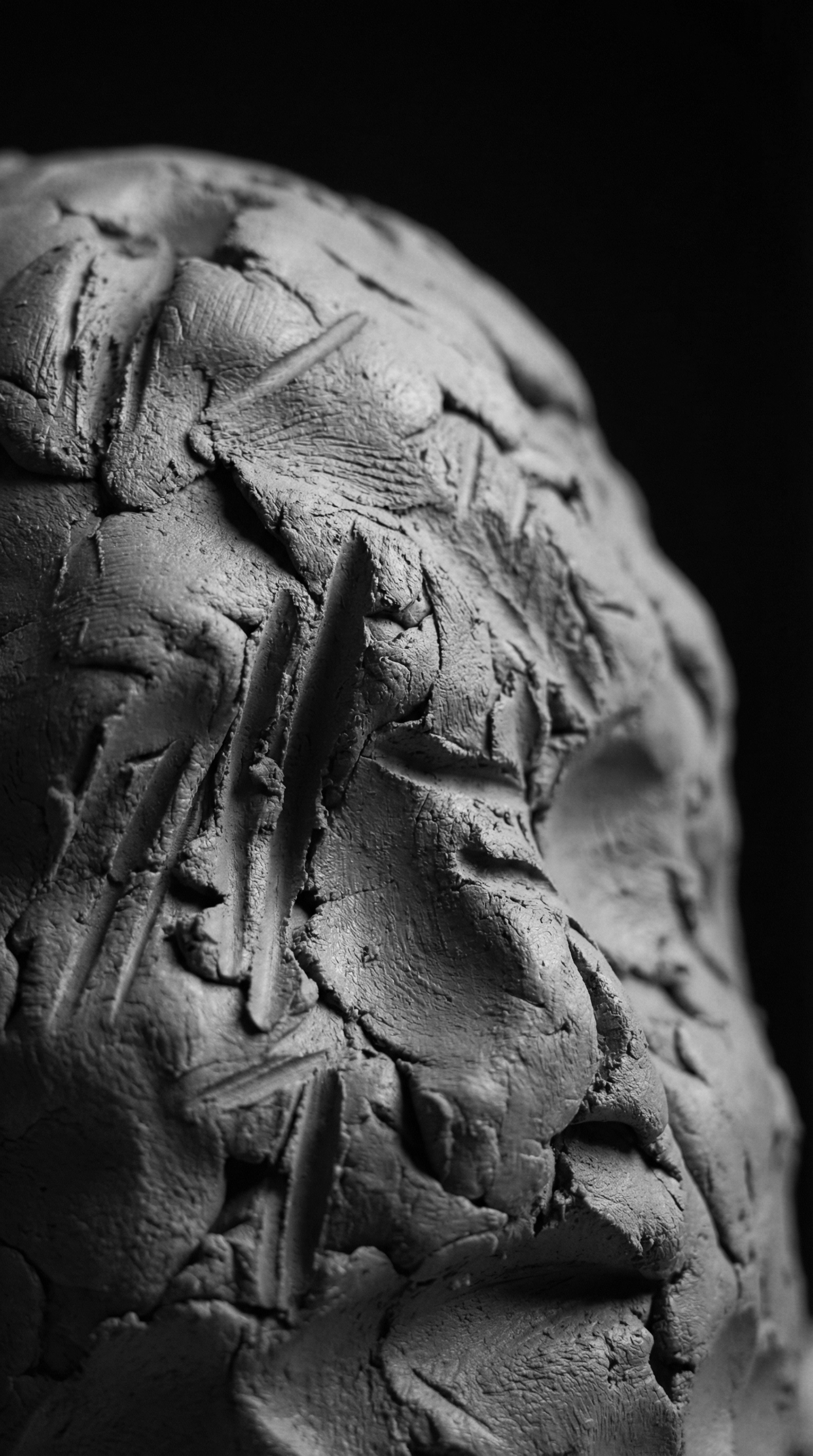
0) Establish the “world” (0:00–0:02)

  • Shot: Extreme macro on clay surface. No identifiable form.

  • Motion: Tiny stop-motion “breaths” in the clay (micro shifts, compression marks).

  • Light: One hard key at a steep angle. Deep shadows. Grain/texture reads.

1) First gesture: “pressure” (0:02–0:04)

  • Shot: Macro pans along a ridge that could be muscle, but still abstract.

  • Motion: Clay subtly gathers into a curve. Tool marks visible.

  • Cue: Introduce a faint sense of directionality (force moving inward).

2) Reveal a partial landmark (0:04–0:06)

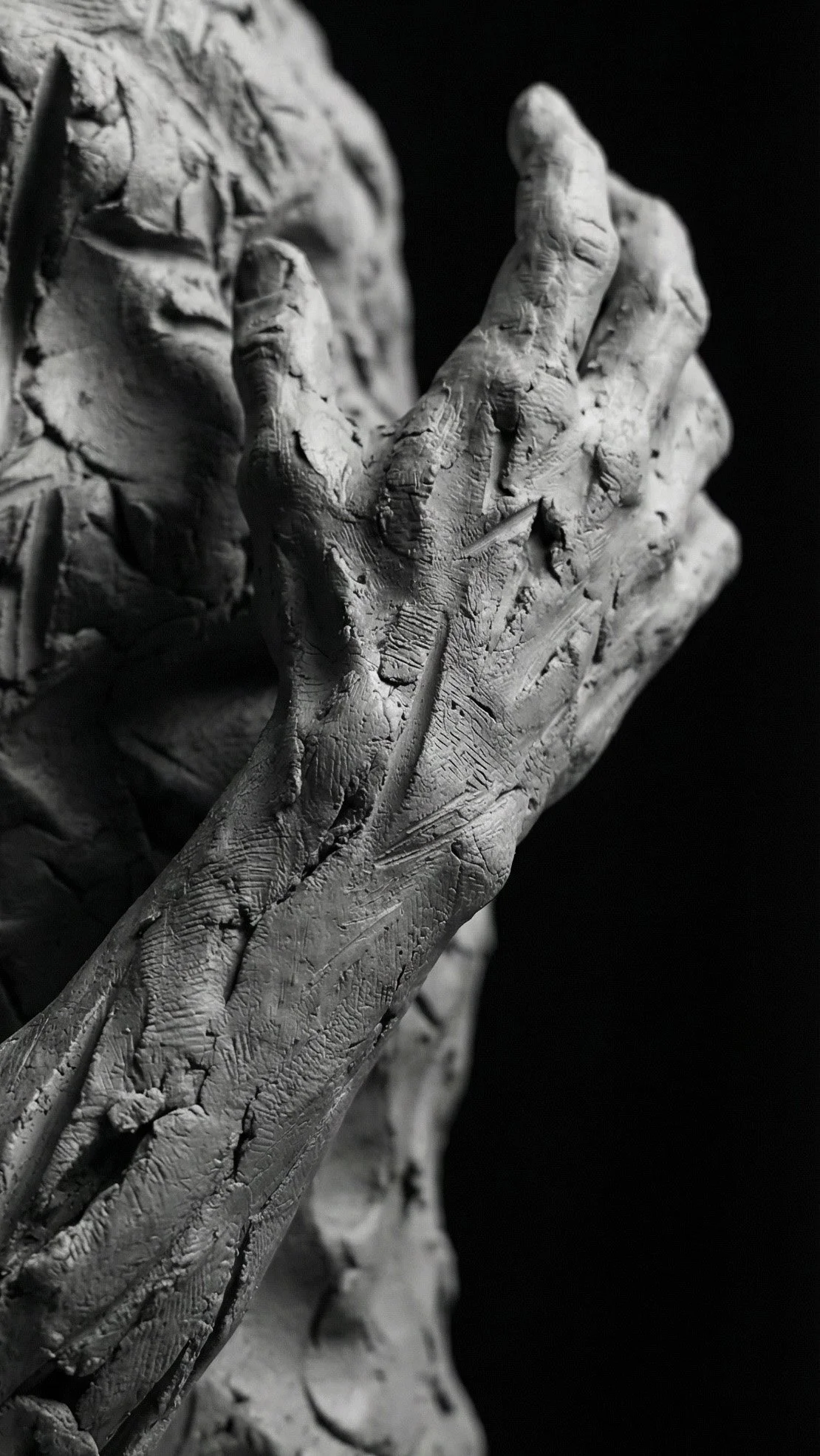
  • Shot: Tight close-up where an elbow/forearm becomes readable for the first time.

  • Motion: Stop-motion sculpting “arrives” at the elbow point—tension increases.

  • Camera: Slight orbit (2–5° total), as if searching.

3) Second landmark: the foot (0:06–0:08)

  • Shot: Hard cut to macro: toes/arch emerging from shadow.

  • Motion: Foot forms from a blocky mass → recognizable plane breaks.

  • Light: Same key angle so it feels like one continuous space.

4) Third landmark: shoulder/back plane (0:08–0:10)

  • Shot: Tight on shoulder blade/back compressing into posture.

  • Motion: Clay “settles” into a load-bearing curve.

  • Camera: Slow lateral slide to emphasize weight.

5) Mid-shot: posture begins (0:10–0:13)

  • Shot: Pull back slightly. You can now read “a body,” but not the full figure.

  • Motion: Stop-motion adds mass rhythmically: build → scrape → press → refine.

  • Theme: Contemplation as negotiation (visible revisions).

6) Hands + head suggestion (0:13–0:16)

  • Shot: Medium close: hand/knuckles near face. Head mass hinted, not clear.

  • Motion: Fingers tighten into place. The head tilts into the hand.

  • Light: Catch a highlight on knuckles/cheek plane (human cue).

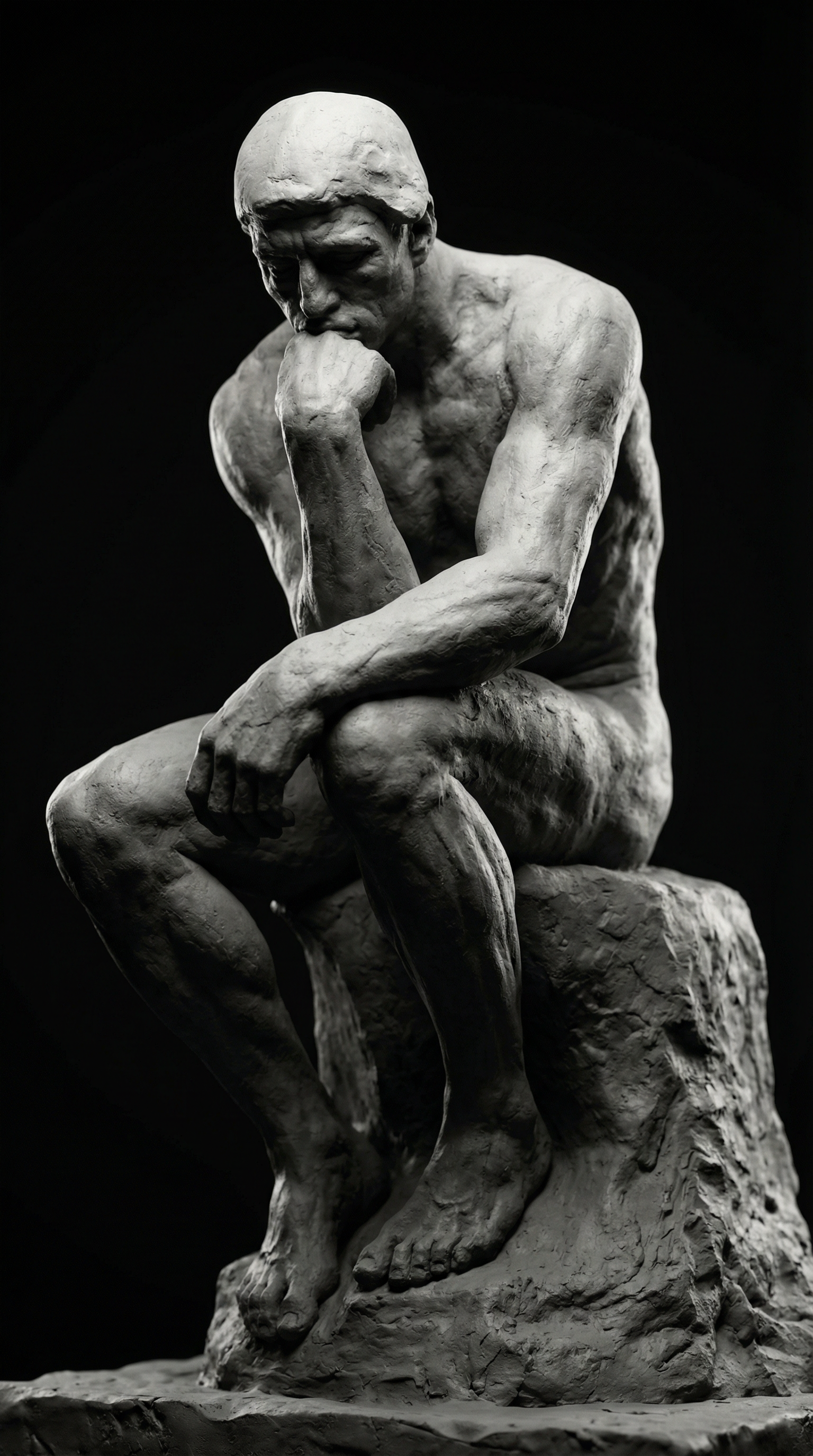
7) The “click” into The Thinker (0:16–0:20)

  • Shot: Medium shot from classic Rodin-ish angle, still partial frame.

  • Motion: One or two decisive frames finalize silhouette: forearm to chin, spine curve.

  • Camera: Tiny push-in (or micro orbit) to lock recognition.

8) Full reveal pullback (0:20–0:26)

  • Shot: Slow pullback to show the whole quarter-scale figure.

  • Motion: Minimal sculpt changes now—mostly camera reveal.

  • Light: Hold dramatic monochrome; let the surface tension do the talking.

9) End beat: stillness with life (0:26–0:30)

  • Shot: Locked full figure for 1–2 seconds.

  • Motion: Optional final micro “breath” in surface (one tiny change) so it feels alive.

  • End: Clean cut (or loop by matching first/last texture frame).

Ezra. 2022, stop motion.